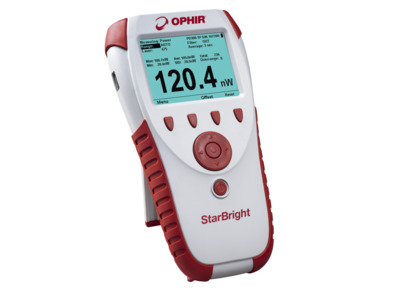
A meter is a readout and processing instrument; its connected sensor determines much of the usable measurement range. Begin with wavelength, continuous or pulsed operation, expected power or energy, beam diameter and pulse conditions.
Check the manufacturer’s compatibility information for the exact sensor and meter combination. Sensor limits, apertures, cooling requirements and calibration conditions must be considered together. A measurement result without those conditions can be misleading.
Plan the optical sampling arrangement with appropriately qualified personnel and keep the calibration record current. Document any attenuator, beam splitter or scaling factor used in the measurement. Record uncertainty and test conditions alongside the displayed value.