Crystals are a largely unseen foundation of advanced manufacturing, and the performance ceiling of a laser is determined to a considerable extent by its small crystal components. High-end laser crystal supply has long been concentrated among a few overseas manufacturers, with supply interruptions and demanding delivery schedules affecting the stability of Chinese production lines. To address this gap, a research team from Shandong University’s State Key Laboratory of Crystal Materials undertook a key Shandong provincial R&D programme in 2022, targeting domestic capabilities in crystals and lasers. The following year, Youwei Optoelectronics (Shandong) Co., Ltd. was established by a founding team that included Shandong University professors. Rather than remaining solely in upstream crystal materials, the company focused on deep-ultraviolet lasers and extended into optical components and complete solid-state laser systems, seeking control of the origins of the supply chain. A recent interview with chairman Wu Kui explored the thinking and determination behind this research team’s transition from the laboratory to an integrated laser business.
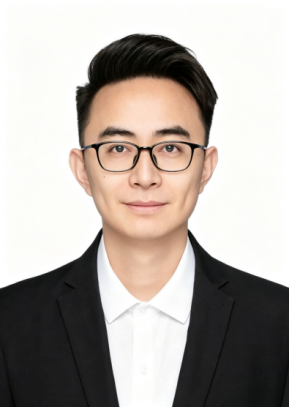
Wu Kui is a professor, doctoral supervisor, young Taishan Scholar, chairman of Youwei Optoelectronics (Shandong) Co., Ltd. and a core member of its founding team. Drawing on the research accumulated at Shandong University’s State Key Laboratory of Crystal Materials, he established Youwei in July 2023 and set up a wholly owned Shandong subsidiary integrating R&D and production. The business spans crystal elements, optical components and solid-state lasers, with applications in semiconductor inspection, industrial manufacturing, biomedicine and scientific research. Under his leadership, the company has brought together researchers recognised through China’s Distinguished Young Scholars, Excellent Young Scientists and Taishan Scholars programmes. It holds 40 intellectual-property assets, led the development of the group standard Deep Ultraviolet Solid-State Lasers (T/CIET 1817-2025), and completed development of several all-solid-state deep-ultraviolet continuous-wave lasers for wafer-defect inspection. Recognised as an innovative small and medium-sized enterprise, it aims to integrate R&D, production, supply and technical services in a specialist crystal and laser equipment company.
From the laboratory to an integrated chain: what makes it possible?
Why did the researchers choose to enter industrial production? For Wu, the answer is practical. A material with leading laboratory performance still faces a “last mile” before it can operate reliably on a production line. The difficulty often lies less in the technology itself than in the engineering and volume-production chain: linking raw materials to finished products and establishing strict, stable quality control. Research teams usually have to change their mindset. In a laboratory, producing one exceptional sample can count as success; in manufacturing, stability, consistency and repeatability come first. Wu acknowledged that the team had taken wrong turns and learned through repeated trial and error how different it is to make something work and to make it work consistently.
That direct experience of uncertainty led to a bold decision: rather than specialising in one stage, the team would develop crystals, optical components and solid-state lasers together, extending from upstream materials to complete systems. If the crystal—the system’s “heart”—remained dependent on others, even excellent downstream equipment would still rely on an externally controlled critical component. Genuine autonomy required securing the source.
Vertical integration provides more than supply-chain certainty. With the whole chain under its control, Youwei can respond quickly to requests for special wavelengths and other customised parameters without repeated coordination and compromises between material, component and complete-system suppliers. Customers also gain a continuous chain from raw-material traceability to after-sales maintenance. For advanced-manufacturing users, control at source and traceability throughout the process are benefits that a single-stage supplier can find difficult to provide.
These integrated capabilities are particularly valuable as Chinese manufacturers seek domestic alternatives. Previously, customers had to weigh imported against domestic products or assemble a “jigsaw” of different suppliers, facing inconsistent standards and high integration costs. By replacing fragmented procurement with an internally controlled chain, Youwei aims to reduce the combined cost of selection, integration and maintenance—an important capability for domestic advanced manufacturing.
The same approach shapes the company’s geographical organisation. Two bases perform complementary roles. Wu explained that Shandong, supported by Shandong University and Jinan’s China Crystal Valley industrial park, handles crystal growth, core R&D and production. A further 2,000 m² crystal production facility was being developed, with completion expected by year-end, keeping the most technically demanding manufacturing close to its research foundation. Shenzhen serves as the market-development, customer-contact and financing base for the Pearl River Delta and customers nationwide, bringing products closer to the market. One base concentrates on making products and the other on selling them; their complementary positions support the integrated laser business.
From technical breakthroughs to greater capacity: accelerating a patient business
If integration answers the question of where products come from, technical progress and capital determine how fast and how far Youwei can develop.
The highest-quality CLBO crystals have long been dominated by overseas companies, with high prices and restrictions on sales to China. Domestic suppliers have entered the field, but crystal quality and batch consistency have often fallen short of overseas products. CLBO absorbs moisture readily and imposes demanding requirements on growth, processing, storage and transport, creating a major technical bottleneck. Youwei set out to address that limitation. The team developed temperature-controlled protection and packaging methods intended to maintain stable long-term operation under humidity and alternating high- and low-temperature conditions. Overcoming deliquescence opens more opportunities for CLBO in high-power applications. The company’s “deliquescence-resistant high-quality CLBO crystal frequency-conversion component” received the Best Laser Product Core Material Technology Innovation Award in the SRA2026 Laser Star Awards organised by Laser Hub, and the product also achieved a significant order breakthrough. For the company, the award and orders reflected customers moving from watching the technology to buying it with confidence.
The team introduced improvements at several stages: first, deeper raw-material purification to a purity above 5N; second, precise growth-process control, slowing growth to allow gradual crystallisation of the constituents; third, annealing after growth inside a vacuum glovebox in a water-free environment; fourth, a water-free processing line that keeps the crystal dry throughout manufacture; and fifth, dedicated storage furnaces providing long-term protection at a controlled 150 °C, with a stated service life exceeding 10,000 hours.
“The significance of this honour goes beyond a medal,” Wu said. “It means that a result originating in fundamental research has become systematically visible to the industry. It also provides public recognition of Youwei’s position in the chain from crystal materials to frequency-conversion components and complete laser systems.”
Behind the breakthrough is expertise built over time. Wu sees the barrier to entry in crystals as their inherently patient development: a crystal must be grown successfully, grown to a high standard and grown to a useful size. Each stage requires years of process experience and accumulated data. It cannot be rushed. This long-term approach has allowed Youwei to turn laboratory crystals into components suitable for stable volume production.
Shenzhen Youwei Optoelectronics recently completed a Series A financing round. Where the funds are spent can reveal more about strategic discipline than the amount raised. Wu identified three priorities. The first is to expand crystal production workshops and invest in phase-two equipment, establishing real manufacturing capacity. The second is to develop higher-power and shorter-wavelength lasers and expand engineering and volume production, broadening and deepening the product range. The third is to strengthen market development and the talent pipeline, building both the sales team and an organisation capable of sustained development. The funding is intended to reinforce production foundations while developing technology and people, supporting coordination among the three businesses and subsequent industrial deployment.
After financing: building capacity while strengthening technology and people
Industrial development is not always a steady, linear climb; it can accelerate at a particular turning point. Looking three to five years ahead, Wu identifies several specific trends.
The first is faster domestic substitution in semiconductor laser light sources. Rising resolution requirements in wafer-defect inspection are increasing the demands placed on sources. Domestic development of high-power, deep-ultraviolet, all-solid-state continuous-wave lasers has become urgent. This reflects the wider move towards greater independence in Chinese semiconductor equipment and creates a clear opportunity for domestic high-end light-source manufacturers.
The second is a surge in demand for advanced crystal materials. Rapid expansion in AI computing is increasing demand for magneto-optical crystals used in 1.6T and 3.2T high-speed optical modules. Together with supply-chain changes caused by interruptions in overseas supply, this is creating an unusual opportunity. For Youwei, which can produce crystals at source, it is both a market benefit and a way to demonstrate the value of integration. Demand for magneto-optical crystals is part of a wider trend: data centres and high-speed interconnects require ever more bandwidth, while AI deployment is expanding computing requirements from training to inference. As the optical communications chain seeks growth in upstream and downstream materials, companies able to combine crystal growth with component integration are better placed to move early.
The third is continued progress towards higher-performance crystals. Smaller, higher-power lasers place greater demands on long-duration stability and overall crystal performance. Improvement depends on a deep understanding of materials and sustained engineering development, rather than simply increasing specification figures.
Youwei’s medium- and long-term plans follow these trends. Wu said: “Our focus over the next three to five years is to establish solid, scaled production and sales capabilities for crystals and lasers, together with high-volume customised R&D and manufacturing. We want to move from being able to make a product to being able to make it consistently in large quantities, while building our brand. From that foundation, crystals and lasers will lead our continued extension upstream and downstream, ultimately forming a specialist company integrating R&D, innovation, production, supply and technical services.”
From a laboratory to an integrated business, Youwei is addressing a question faced across China’s advanced-manufacturing industries: when a critical capability is controlled elsewhere, can a domestic company build it step by step? Its answer is taking shape in crystal-growth furnaces operating day and night and in the decision to connect the full chain from a crystal to a complete laser.