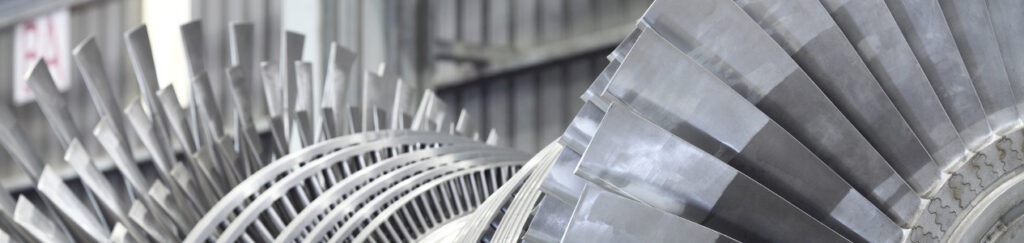
Aerospace equipment is developing towards higher thrust-to-weight ratios, higher operating temperatures, lower weight and longer service life. Nickel-based superalloys, SiCf/SiC ceramic-matrix composites, carbon-fiber composites and titanium alloys are increasingly used. Their hardness, poor thermal conductivity, heat sensitivity and susceptibility to cracking can make conventional milling, electrical-discharge machining and laser processing difficult. Recast layers, microcracks, thermal distortion, delamination and edge chipping can affect component fatigue life and overall reliability, creating important manufacturing constraints.
Xi’an Shengguang Guiyan Semiconductor Technology Co., Ltd. has developed domestically produced water-guided, or microjet-guided, laser equipment. The company presents its “liquid optical fiber” coupling and low-thermal-damage processing as an option for aerospace precision components. Based in Xi’an’s aerospace industrial area, it reports commercialisation of water-guided laser equipment, internal development of water–light coupling and complete systems, and 100% domestic equipment content. Its equipment and process solutions serve aerospace, third-generation semiconductors and superhard materials. The company reports customer acceptance and orders within AVIC and Aero Engine Corporation of China supply chains, with production validation at aircraft manufacturers. The process couples a high-energy laser into a micrometre-scale laminar water jet. Total internal reflection at the water–air interface guides the light to the workpiece, while the flowing water guides the beam, cools the material and removes debris. This addresses limited focus depth and thermal effects associated with conventional laser processing.
The company’s five-axis equipment and Zhulong control system are described as reducing the heat-affected zone to a micrometre scale and suppressing recast material, oxidative burning and thermal-stress cracks. A parallel water jet supports high-aspect-ratio holes and kerfs with little taper, without repeated refocusing. The process is intended for curved surfaces, inclined and shaped cooling holes and deep slots. Non-contact processing avoids cutting-tool wear, while compatibility with several difficult materials can reduce changeover costs.
The manufacturer reports process validation on several representative difficult aerospace materials and the development of procedures for multiple component types.
Superalloys
Turbine blades, combustors and other aeroengine hot-section components contain many film-cooling holes of approximately 0.4–0.8 mm. Electrical-discharge and pulsed-laser machining can generate recast layers and microcracks that may propagate in service. The described water-guided system can drill coated superalloy components in one operation, rather than drilling before applying a thermal-barrier coating, and can produce shaped cooling holes, including cat-ear and fan-shaped geometries. For nickel single-crystal and cobalt-based alloys, the manufacturer reports heat-affected zones of a few micrometres, smooth hole walls without obvious recast layers, burr-free entrances and aspect ratios up to 20:1. Stable positioning of inclined shaped holes and reduced grinding and pickling are intended to improve batch consistency and yield in blade cooling-hole production.
SiCf/SiC ceramic-matrix composites
These low-density, high-temperature materials are candidates for next-generation engine hot sections, but differences between the ceramic fibers and matrix make machining difficult. Mechanical processing may cause chipping and fiber pull-out, while conventional lasers can ablate the matrix or damage fiber bonding. Continuous water cooling and debris removal are intended to reduce thermal damage during cooling-hole machining, shaped-slot production and contour cutting, maintaining hole-wall and fiber–matrix interface integrity.
CFRP and titanium components
Carbon-fiber-reinforced polymer composites and titanium alloys are widely used in aircraft skins and structures. Conventional processing can cause composite delamination, resin carbonisation and thermal distortion of titanium. The described low-heat water-guided process suppresses separation between composite layers and produces clean cuts. It also supports precision contour cutting and microstructure production in titanium, with controlled thermal distortion, for both large composite parts and small precision components.
The company originally developed water-guided processing for third-generation semiconductors. It reports batch-process validation for rounding 12–14-inch silicon-carbide ingots, wafer dicing and shaped processing, and applications in diamond tooling and functional ceramics. Transferring process experience between semiconductors and aerospace broadens the equipment’s potential use.
Water-guided laser processing addresses particular capability gaps rather than replacing every established process. Its intended strengths are low thermal damage, high aspect ratios, complex curved-surface microholes and high-value brittle or hard composite parts. Conventional methods can retain a cost advantage in ordinary rough machining. Continued development of domestic coupling components, five-axis motion platforms, pure-water circulation and material-specific process databases is intended to reduce adoption barriers.
Materials provide the foundation of aerospace manufacturing, while processing determines how their capabilities can be used. As materials evolve, manufacturing methods must also develop. Domestic water-guided equipment offers an additional precision-processing option for superalloys and ceramic-matrix composites, with the aim of improving reliability and service life. Further process development and production-line validation may extend its use in aeroengines, propulsion systems and aircraft structures.