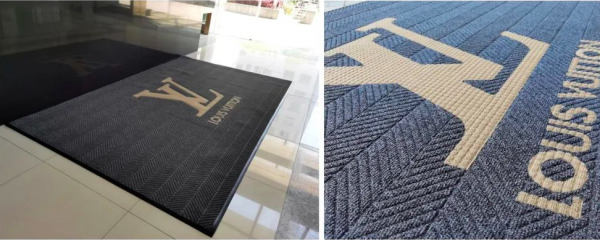
Carpets are a long-established craft product used in homes, hotels, exhibition halls and vehicles. Their functions extend beyond decoration to noise reduction, insulation and slip resistance.
Growing demand for personal and commercial customisation can exceed the flexibility of traditional methods. Complex patterns and textures are often expensive and can restrict available styles. Industrial, commercial and domestic carpet production has therefore introduced laser processing alongside traditional methods to produce customised patterned and textured effects.
Traditional carpet decoration uses hand weaving, mould embossing, embroidery and pigment printing. Laser processing focuses a high-energy beam on the carpet so that surface material melts or vaporises locally. A programmed engraving path follows the design to create a customised patterned effect, expanding the range of classical and contemporary designs.
CO₂ lasers can process textiles, fibers and fabrics without mechanical contact. The application description highlights smooth cutting, sealed edges, limited deformation and computer-generated patterns without dedicated blades or moulds. It presents savings in material, labour and pattern-making time as ways to improve carpet-production efficiency and cost.
Product example
Reported features
1. A 2.5-inch optical focusing system, described as producing a smaller spot and reducing thermal effects.
2. Optical transmission exceeding 99%, with stability and a low thermal-expansion coefficient.
3. Reported hole roundness of 95% for perforation work.
4. A motor with increased load capacity and improved heat dissipation.
5. Higher precision and cutting speed, with a stated efficiency improvement of 20%.
6. A large adjustable processing area of 800 × 800 mm, with customisation available.
7. A 2,500 W control-drive capability and resistance to interference.
8. An integrated design intended to reduce footprint and simplify maintenance.
9. An internally developed user interface designed for straightforward operation.
10. Expandable intelligent and automated functions intended to improve overall processing efficiency.
Reported parameters of the example
Machine designation: Super Series. Output-power options: 180 W, 250 W, 350 W and 500 W. Repetition frequency: 1–130 kHz. Laser wavelength: 10,640 nm.
Marking-field options:
400 × 400 mm or 500 × 500 mm;
600 × 600 mm or 750 × 750 mm.
Marking method: XYZ three-axis dynamic focusing. Minimum line width: 0.2 mm. Marking speed: up to 10,000 mm/s. Cooling: temperature-controlled chiller. Operating environment: a controlled 15–30 °C, with 30–80% relative humidity and no condensation. Overall dimensions: 1,555 × 1,253 × 1,780 mm. Options listed include motorised height adjustment, a MUMS system and CCD equipment.