Oil extraction commonly uses drilling tools to break rock and form a borehole to the required depth. Polycrystalline diamond compact (PDC) cutters are important working elements of these drill bits.
PDC combines diamond powder with a cemented-carbide substrate through sintering at very high pressure and temperature. It brings together diamond’s hardness, wear resistance and thermal conductivity with the substrate’s strength and impact toughness, making it useful for drilling and other wear-resistant tools.
This application examines how a laser can shape the surface of such a hard diamond composite.
Laser processing provides non-contact operation, controlled heat input and precision material removal. Combining a controllable beam with precision mechanics, metrology and computer control supports automated, accurate shaping of PDC surfaces.
More demanding exploration conditions, including abrasive formations, very hard rock and tough interlayers, can make conventional flat PDC cutters difficult to engage and can contribute to chipping and other failures. Forming a ridge-shaped or other non-planar surface on the cutter is one approach to improving cutting engagement and drilling efficiency.
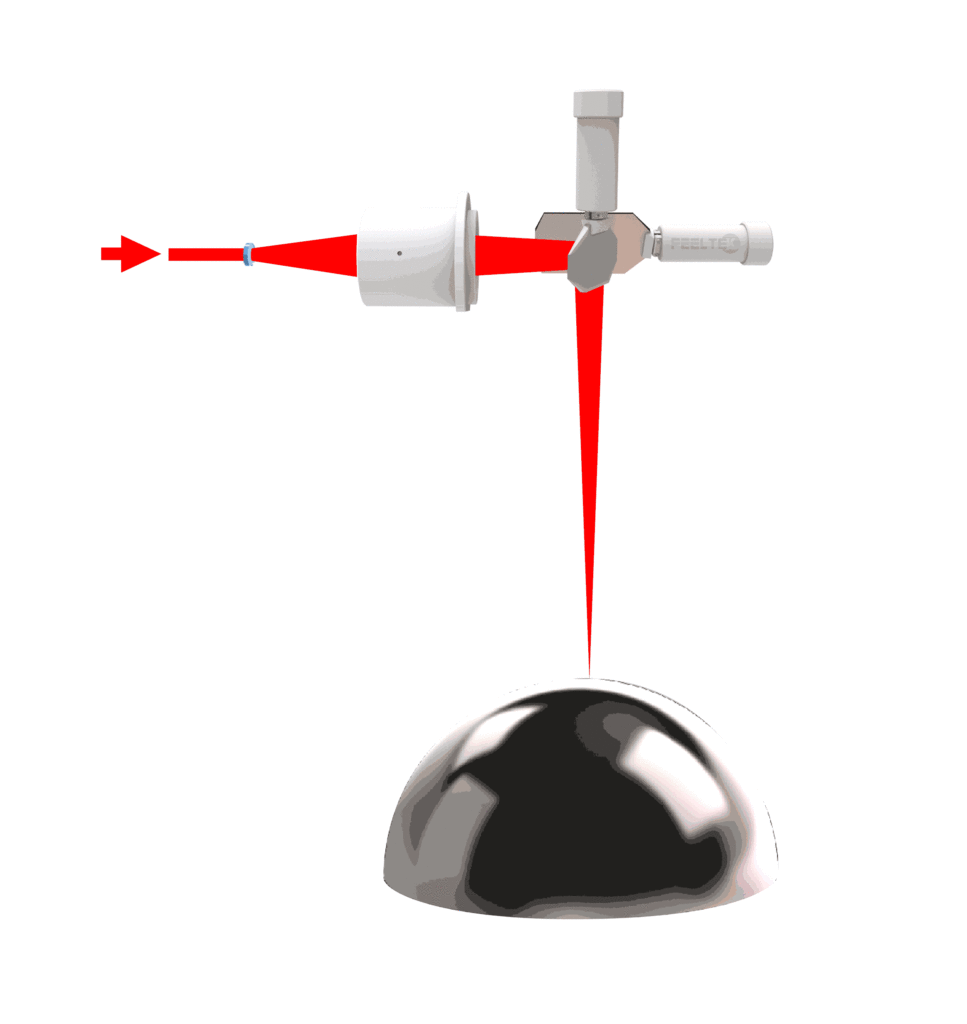
Conventional galvanometer scanning alone can struggle with these shapes. In the reported experiment, a 3D dynamic-focus system was combined with a 100 W MOPA fiber laser. As the beam moved across an irregular surface, the dynamic Z axis adjusted the focus in real time. This enabled precision 3D subtractive processing of surfaces, outer profiles, chamfers and other shapes in one operation.
Off-axis and coaxial vision systems can also be integrated into the equipment to improve positional control and alignment during laser shaping.