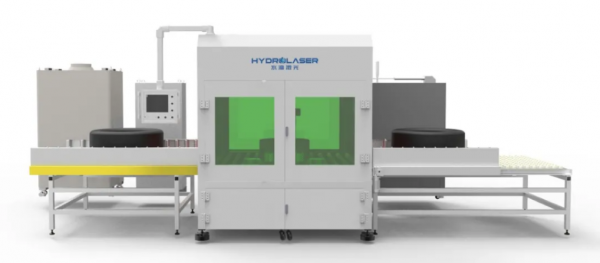
Laser cleaning is widely discussed as a promising lower-waste cleaning technology because it is non-contact, precise and suitable for automation. Industrial applications include automotive manufacturing, aerospace, precision electronics, medical equipment and shipbuilding. In electric vehicles, application solutions extend across batteries, motors, power electronics, body structures and components.
Cleaning before and after automotive welding
The process removes oil, rust, oxide coatings such as zinc layers, release agents and other contamination from welding regions on body panels, chassis parts and battery trays. Preparing the surface can improve joint strength and reduce porosity, incomplete joining and inclusions. A cited BMW application reports a 65% improvement in cylinder-block cleaning efficiency and a welding-defect rate below 0.02% after controlled removal of oxide layers 0.1–0.3 mm thick.
Mold cleaning and maintenance
Cleaning removes release-agent residues, carbon deposits, polymers and oxides from stamping, injection and casting molds. Restoring surface condition supports part quality, including the appearance of stamped body panels, while extending mold service life and reducing maintenance downtime.
Traction-battery manufacturing
Before electrode coating, cleaning removes oil and oxides from copper and aluminium current-collector foils to improve slurry adhesion.
Before welding, cleaning removes oxides and insulation residues from tabs, connecting pieces and busbars to support joint quality and reduce contact resistance.
Before sealing-pin welding, the sealing region on the battery cover is cleaned to support a leak-tight weld.
Automotive component cleaning
Engine blocks, crankshafts, connecting rods and other components can be cleaned of oil and contamination to support assembly accuracy and operation and reduce wear and failures. Cleaning oil, deposits and corrosion from brake disks and pads is another application discussed for maintaining braking performance.
Repair and refurbishment
Localised rust and paint removal can target damaged body areas. Engine blocks, cylinder heads, gearbox housings and other repair regions can be cleared of oil, carbon, corrosion and old coatings while retaining the underlying metal. The described machine-vision arrangement identifies corroded areas and plans scanning paths; a reported example processes one square metre of corroded surface in eight minutes.
Electric motors: stripping rectangular copper conductors
The process can remove enamel, film wraps and PEEK layers from rectangular copper conductors. The application description reports stripping times below 0.6 seconds per operation while avoiding damage to the conductor.
Power electronics: cleaning IGBT copper busbars
Laser cleaning of partly assembled welded components is used to meet the cleanliness requirements associated with subsequent IGBT wire-bonding operations.
Tires and wheels: applications include tire-mold cleaning, cleaning the inner surfaces of tires and wheel cleaning. Shuidi Laser is developing laser processes across these tire-related operations.
In addition to removing rust, paint, oxides and oil from wheels, brake components, body panels and engines, laser cleaning equipment is presented as offering stable long-term operating costs, limited maintenance and reduced consumable use. It can also reduce manual work and support automated operation.
The expansion of higher-power pulsed cleaning equipment and more mature AI-based control systems is expected to support more efficient, lower-waste and more automated automotive manufacturing.